Monday, 2 October 2023

Uncovered: conflicts of interest in Soul Survivor's £100,000 in donations to XLP

There's a charity called XLP. It's an ambiguous name, but as you peruse their website it's hard not to be impressed by their work.

Their mission statement is:

"To engage in long-term relationships that empower young people from disadvantaged backgrounds to complete their education, avoid anti-social behaviour, and ultimately become independent and confident contributors within their communities"

Soul Survivor made a number of donations to XLP in the 2000s and 2010s. 

The first one I can find is £14,928 in 2004.

It's followed by £11,000 in 2005 and £15,457 in 2006.

These are all listed in Soul Survivor's annual filings at Companies House.

In total, they donated £99,548 over 12 years. 

So what?

Well, the problem is that Liz Biddulph became a trustee of XLP in November 2004:


(Source: XLP pages at Companies House) 

What's a trustee? According to the Charity Commission

"Trustees have independent control over, and legal responsibility for, a charity’s management and administration."
Trustees have a legal duty to act in a charity's best interests.

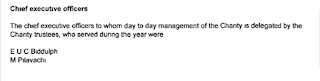
I believe Liz Biddulph was already co-leader of Soul Survivor at this point. Chris Bullivant, a former employee, mentioned this in a recent tweet. And certainly the first time the Chief Executive Offices are noted in the annual filings, in 2006, her name appears next to Pilavachi's name:

Chief Executive Officers: Biddulph and Pilavachi
(Source: 
Group of companies' accounts made up to 31 December 2006, Soul Survivor filings at Companies House, page 1) 


When you lead a charity you're expected to act in the best interests of the charity, and the people they exist to help, right?

That means donations after 2004 create a conflict of interest. Are these in the best interests of Soul Survivor and in the best interests of XLP?

We can see an example of this the very next year.

Soul Survivor finished 2004 with only £49,284 in the bank. That's very low for a charity with a turnover of more than £3,000,000 that employed 38 staff.

And yet, in 2005 Soul Survivor donated £11,000 to XLP.

The charity she lead donated £11,000 to a charity she has legal responsibility for.

That year it looks like Soul Survivor made a number of staff redundant: the 2005 report only lists 25 employees. In that context was the XLP donation in the best interests of Soul Survivor?

The Charity Commission has rules about this:

It's vital you deal with conflicts of interest

(Source: The Essential Trustee)

Charities are expected to establish a process that deals with conflicts of interest. Did Soul Survivor do this? 

There would be no complications if Biddulph was donating her own money. The challenge here is that charity funds were being donated.

And that challenge grew.

Because, in 2007 Mike Pilavachi also became a trustee of XLP:


(Source: 
XLP pages at Companies House) 

At that point, both executive directors of the Soul Survivor charity are also both trustees of XLP. And Soul Survivor continues to give to XLP.

The next donation to XLP is £1,477 in 2008. And then £26,486 in 2011.

If both Soul Survivor's leaders have conflicts of interest, it's quite a challenge to have a process that counteracts them. However, it is possible that another trustee took on the decisions about grants in this period. 

The donations keep on going.

From 2011 these gifts were listed in the Soul Action section of the report. Soul Action is a partnership with Tear Fund. The 2016 filings provide some insight into how this worked:


No details are given about who 'the team' were. 

In 2013, it looks like Soul Survivor had another tricky year, spending more than they received in funds. They end the year with £95,499 in the bank, and their filing in 2014 has two fewer staff, which may be connected. And yet they still donate £5,400 to XLP in 2014.

I'm not saying anything bad about XLP and the work they do. I am saying there were conflicts of interest here for Soul Survivor. And did the leaders follow Charity Commission rules regarding them?

As you'd expect from trustees, the support extended to other aspects. Here is Mike Pilavachi speaking to young adults on their gap year programme:

Pilavachi speaking to gap year students

And here he is platforming the charity at one of the summer festivals:

XLP staff on stage at Soul Survivor festival

In 2014 Liz Biddulph stepped down as co-leader of Soul Survivor. However, as discussed in the previous post she remained a staff member. A conflict of interest may still remain in her regard, albeit of a different nature.

In 2017 Pilavachi stepped down as a trustee of XLP. 

Biddulph remained a trustee until 2020.

Since 2000 there were £99,548 in donations from Soul Survivor to XLP. All of these were made when one, or both, of the Soul Survivor leaders were trustees of XLP.


More Soul Survivor blogs

The odd lines of accountability for the Mike Pilavachi interns

Questions about a £500,000 gift and Mike Pilavachi


Monday, 4 September 2023

Following the money part 3: concerns about the collection, a mystery money move and who took home more than £90,000?

It's 2019. This was the year that Boris Johnson became Prime Minister of the UK after the resignation of Theresa May.

This post continues the series following the large gifts than Soul Survivor received. For a better sense of the narrative, start with part 1.

Where were we? Yes, that's it: the £500,000 donation.

Let's begin by focusing on the location for that gift: the Soul61 charity. 

Here we find the donation listed amongst the other gifts for their 2018-2019 financial year:

YTL Utilities donation: £500000


(Source: Total exemption full accounts made up to 31 August 2019, Soul61 filings at Companies House, page 11)

Later in the report we find details of the spending:

"Soul61 received a further donation of £500,000 from a donor wishing to support the work of various Soul Survivor activities, to be used at the discretion of Mike Pilavachi. The funds were paid into Soul61. During the year, £110,000 was paid to Soul Survivor Watford to be used towards the reconstruction of the Watford church"

(Source: Total exemption full accounts made up to 31 August 2019, Soul61 filings at Companies House, page 14)

Can we see that money arrive at the church? No. As explained in the last post, the donations to D & J M Morgan Trust (the charity behind the church) aren't itemised, even those from other organisations. 

All we know is that the payments were made by the end of the Soul 61 financial year: 31st August 2019.

By that point we've seen the following gifts from YTL Utilities:

£100,000

£100,000

£500,000

A total of: £700,000

And we've seen the following money spent:

£75,000 filming festival session

£3,000 filming festival sessions

£40,000 church building fund

£3,538 supporting potential leaders' travel to events

£110,000 church building fund

That means the total expenditure from those donations to Soul61 by September 2019 was: £231,539

And what amount was spent on young leaders? £3,538

That's it. 

2% of the money spent so far has gone on young leaders.

It's looking more and more like there are other reasons that gift was paid to the Soul61 charity

Why didn't they pay this third gift to K & J M Morgan Trust? They'd already began the building project by the time the gift had arrived, so they knew about that need. It was unrestricted, so they wouldn't lose flexibility if they subsequently changed that decision.

The leader who never left

In the 2018-2019 Soul61 report I notice something I missed in previous reports: Liz Biddulph gets a mention. In the 'Related parties' section, the report says:

"Andrew Croft and Ali Martin are also trustees of Soul Survivor Ltd, and Mike Pilavachi and Elizabeth Biddulph are employees of Soul Survivor."

Now, back in 2014, the Soul Survivor report told us this:


(Source: Total exemption full accounts made up to 31 December 2014, Soul Survivor filings at Companies House, page 2)

Since only Mike Pilavachi and Duncan Layzell have been listed as executive directors, she must have left her old role. I mistakenly assumed she had left Soul Survivor entirely. 

The final summer festivals

Let's backtrack to the start of 2019, and turn our attention to the Soul Survivor charity.

What a ride this year must have been for them. The structure of the year matched the previous couple. But clearly it must have been emotional to close things down,  and the act of closure brought some unusual situations.

This year, the charity took an exceptional approach to budgeting: 

"The trustees decided that 2019 would be the last year of events and approved a deficit budget for 2019 support by the reserves brought forward."

(Source: Total exemption full accounts made up to 31 December 2019, Soul Survivor filings at Companies House, page 12)

Along with their typical annual costs, they also had to spend money on closing down. Their report for 2019 lists 'Exceptional closure costs' of  £113,374.

This year, total income was £3,792,663. Total expenditure was £4,036,410. Whoa! Can the reserves take that much overspend?

Yes, it appears they can. They finished the year with 'General funds' of £231,784. 

In 2019 Soul Survivor continued their considerable support of Soul61. More on that in a minute.

Unusually, the charity also gave a gift to Youthscape of £50,000. Who? Youthscape are a Luton-based charity with many Soul Survivor connections. Luton and Watford are 20 miles apart, a fact that I imagine also helped relationship building between the two organisations. Youthscape were planning to start a summer festival at the time of the closure announcement, and it seems Soul Survivor decided to support them in this.

Who got paid over £90,000?

This year Soul Survivor listed a reduced headcount: 16 staff. I think that's because these totals are a yearly average of employee numbers, and because the charity had a phased close-down during the year. 

They spent £561,799 on staff costs in 2019.

Mike Pilavachi resigned from his role as joint Executive Director on 30th September, Duncan Layzell remained in post throughout the financial year. 

One staff member was paid a salary, including redundancy, between £60,000 and £70,000. Sounds familiar. But another staff member was paid a salary, including redundancy, between £90,000 and £100,000.

Wow.

I'd assume that the two co-leaders of the charity get paid the most of all the employees: Pilavachi and Layzell. That normally happens, as they have the most responsibility. Pilavachi is also an employee of Soul Survivor Watford church. Maybe he's only part time here, and so one of his full-time colleagues has a larger salary from this charity. So, maybe these salaries are Layzell and someone else.

Compared to the year before, one of these salaries rose significantly into the £90,000-£100,000 pay bracket. I imagine this was a severance package - it would be rare for a charity employee to get a 20-40% pay rise. That would rule out Layzell, who is still listed as an employee of Soul Survivor into 2020.

So who got paid over £90,000 in 2019?

If it was Pilavachi, then we should be concerned, because in that case the deal would have been approved by the trustees. And some of them have conflicts of interest. There are the trustees of Soul Survivor in 2019:

  • Graham Cray
  • Andy Croft
  • Ali Martin
  • Christopher Lane
  • David Westlake
  • Jessica Jones 
  • Keith Johnson

As detailed in a previous post, Croft has many conflicts of interest. The largest of these seems to be his writing partnership with Pilavachi. I've also talked about Ali Martin's conflicts of interest previously. The most significant seems to be that in the church, in 2019, Ali Martin reports to Pilavachi. The prospect of an employee approving their boss's redundancy? Seems questionable.

So it's important to ask the question, was who was paid over £90,000 in 2019?

A mysterious money move

While we're talking about staffing I'd like to bring up another unusual detail. Remember how each year some Soul Survivor staff do work for Soul61? Soul61 are charged for the staff time that entails. Normally that finger is around the £10,000 mark. 

Which Soul Survivor employees is this for? The 2018-2019 Soul61 report tells us:

"Mike Pilavachi, Ali Martin and Andrew Croft also provided some of the teaching to the students and interns. The charity also employed two course assistants to manage the course, arrange further teaching and provide pastoral care for the students."

(Source: Total exemption full accounts made up to 31 August 2019, Soul61 filings, page 2)

Martin and Croft are employees of the church in 2019, so recharges for them would be listed separately. As such, the Soul Survivor charges look like Pilavachi time working for Soul61. 

This may be a slight simplification. Maybe this charge covered a little time from one or two other Soul Survivor staff as well. 

Anyhow, several strange things happen with these recharges in 2019.

Firstly, there's a contradiction.

In the 2018-2019 Soul61 filings, the financial year that ends 31st August, we are told:

"Certain members of Soul Survivor perform services for Soul61, which are recharged at cost. The amount of recharges for services provided in 2019 was £11,360..."

(Source: Total exemption full accounts made up to 31 August 2019, Soul61 filings, page 14)

But, in the 2019-2020 Soul61 filings the authors say:

"Certain members of staff of Soul Survivor perform services for Soul61, which are recharged at cost. The total amount of recharges for services provided in 2019 was £29,676 (2019: £43,652)"

(Source: Total exemption full accounts made up to 31 August 2020, Soul61 filings, page 18)

So in the Soul 61 2018-2019 financial year how much money moved that charity to Soul Survivor for staff time? £11,360 or £43,652? 

That's weird.

Let's assume the former number is correct, as it's more consistent with the previous reports. If we look further at the 2019-2020 Soul61 reports, the amount charged for staff time jumps. In 2019-2020 the charge is £29,676, 260% of the year before.

That's also weird.

And then, the timing is strange: as we've seen Pilavachi resigned on the 30th September. The start of the 2019-2020 Soul61 financial year is 1st September. He's only in post for 30 days, and yet the charge for the whole year goes up by 260%. 

That's also weird.

And then, the purpose is strange: I've heard that Soul61 gap year attendees arrive in November each year. So Pilavachi wouldn't be around for any of the gap year lectures. Who would be listening?

That's also weird.

And then, as Steve Lewis spotted previously, for the 2019/2020 financial year Soul61 changed the person who was their independent examiner.

That's also weird.

For 8 years Soul61 had hired FB Hay Associates Ltd of St Albans to be their independent examiner. Charity Commission rules require them to do this. Their guidance says:

"The role of the independent examiner is to provide an independent scrutiny of accounts. The examiner plays a role in maintaining public trust and confidence in charities"

(Source: Independent examination of charity accounts: Directions and guidance for examiners (CC32))

You see the name FB Hay Associates Ltd on every Soul61 report from 2011-2012 to 2018-2019. And a corresponding charge for their services: £1,200 in 2018-2019.

And then in 2019-2020 Soul61 change the provider. The independent examiner for that year is listed as Wyatt & Co Chartered Accountants of Leeds. Their charge for this service? £1,200.

Maybe they changed to get improved service. Or maybe FB Hay Associates were putting their prices up.

But, all these weird things, they add up. What are the chances of all of them happening at the same moment? Also do you notice that the discrepancy in the new report makes the new recharge look like a 32% drop rather than a 160% increase?

It is possible someone was trying to move £15,000 from Soul61 without others noticing, and this was how they achieved that.


Problems with Soul Survivor Trading

This year Soul Survivor Trading generated sales of £484,144. They had costs of £514,273. They made a loss of £30,129 (These figures are taken from page 24 of the 2019 Soul Survivor report)

Now, this presents a problem. Because, if I look at the Companies House records for this year, I discover that this company had an equity of £-65,810.

The company generated most of its sales at the summer festivals. If those sales no longer happened, where would the money come from to dig them out of this hole?

At this point I start thinking... those large gifts, couldn't you use them to pay off the debts here? It's hard to see a prospect of the company breaking even: they had made a loss 4 of the previous 5 years.

Over at the Church, the building programme talked about in previous years hit a snag: where would the church meet while the building work was happening? Eventually they found a solution, phasing the work in a clever way, and building was planned to begin the following year: in spring 2020.

In 2019-2020, the income of the church was £1,503,395. Of this money £469,532 was restricted, donations for a specific purpose - maybe for the building programme. They spent £1,030,924.

This financial year the church gave £12,000 to Soul61. No surprises there.

They also give £4,915 to Soul Survivor Ministries. This is the first gift I've seen going from the church to the charity. We can't verify whether that arrives at the charity in 2019 or in 2020 as they don't itemise unrestricted gifts. I imagine it does.

I also notice a gift to 'New Frontiers' of £2,487. That's a different church movement outside of the Church of England. There are many social media posts of Pilavachi speaking at their conferences. This gift may be connected with that, or it may be a donation to a particular church in the movement. 

At this point I'd normally talk about staffing levels at the church. However, they go through abrupt change two thirds of the way through their financial year at the start of 2020. More on that next time.

Soul61 begin a new financial year in September 2019. As we discussed earlier, one early event in that year was the resignation of Mike Pilavachi from the Soul Survivor charity. Will that event change the Soul61 year? After all, he leads the work with his interns.

It appears not. Four interns join the programme this year. Seems like business as usual. We also had 18 gap year participants, paying the usual amount: £6,500 each.

And Pilavachi continues speaking at festivals. In October of 2019 he spoke at the Multiply Conference Festival, run by Catalyst, one of the New Frontiers movements. Here is one of the promotional tweets from Catalyst earlier in the year:

Multiply conference tweet

Concerns about the summer festivals collection

I'm a little confused about Soul61 income this year. 

We're used to seeing money from the Soul Survivor collections arrive in Soul61. The collection happens at the summer events, which are held in August. 

The Soul61 financial year ends on 31st August. Looking back, the money seems to arrive at Soul61 after August, meaning the next Soul61 financial year.

The 2019 Soul Survivor report mentions this collection on page 10:

"Total collection of £122,033 contributing £40,678 to each of Soul Action, Central Asia and Soul61"

Later on in that same report, we see this £40,678 joining some other funds set aside for Soul61:


(Source: Total exemption full accounts made up to 31 December 2019, Soul Survivor filings at Companies House, page 43)

So the total amount of these restricted funds leaving Soul Survivor for Soul61 is £67,704. Do you follow?

If we flip back earlier in the report we see this amount combined with the a £12,000 gift from the charity, and £5,900 from the Central Asia fund:

(Source: Total exemption full accounts made up to 31 December 2019, Soul Survivor filings at Companies House, page 43)

So, in total Soul Survivor moved £85,604 to Soul61.

But. 

But, when I look at the Soul61 report the numbers don't match. Take a look at this extract:


(Source: Total exemption full accounts made up to 31 August 2020, Soul61 filings, page 12)

Firstly, the amount listed for 'Allocation of collection' is 0. That's not right, and is inconsistent with the presentation of figures from previous years.

This may be a mistake.

This could be deliberate, to distance the collection money from the restriction that it be given to 'young leaders' so it can be used for other things. As far as the Soul61 filings are concerned, these are now general funds with lots of flexibility.

That's a problem, because the Charity Commission is strict about gifts being used in the correct way. In the Fundraising Code of Practice they say:

"You must make sure that donations are used to support the cause in line with any conditions attached to the donation. This [sic] may be conditions the donor sets when making the donation or representations you make (either verbally or in fundraising materials) about how the money will be used."

This discrepancy also happens to occur at the moment when Soul61 changed their independent examiner. 

I'm assuming that the money didn't vanish, that it became part of the £128,732 from Soul Survivor Ministries labelled 'Unrestricted funds'. It's unclear where the rest of that money came from. Perhaps there is another donation in 2020, before the 31st August year-end?

Wherever it came from, that is a huge amount. Most years Soul61 are given an unrestricted donation of £12,000-£15,000. In 2019-2020, the amount is ten-fold: £128,732. 

Why is that much money being moved into Soul61? Should it be paying off the debts of Soul Survivor Trading Ltd? Why does Soul61 need any more money?

In their 2019-2020 financial year, Soul61 listed two employees with a combined salary bill of £29,676.

There were no more large gifts from YTL Utilities. 

Soul61 moved some large sums of money out. Let's look at them in the next post, as they tie in with other events in 2020.

Liz Biddulph resigned as a Soul61 trustee on the 1st November, after 8 years. 

Speaking of Liz Biddulph, she signed off the 2019 trustee report for Soul Survivor International. It listed no income or expenditure, and £3,351 of reserves. No change there from the previous years. 

What a year, eh? It took me a lot of time to line up everything that was going on.

In the next post we turn our attention to 2020, and the biggest single spend of the YTL gifts so far:

Following the money - part 4: a £200,000 transfer of staff and a mystery £20,000

Sources

This blog draws extensively from the annual reports of the charities. There are too many references to footnote, but you can find the whole reports here:

Soul61 filings at Companies House

Soul Survivor filings at Companies House

Soul Survivor Trading Limited filings at Companies House

K & J M Morgan Trust report from 2018-2019

K & J M Morgan Trust report from 2019-2020


Friday, 25 August 2023

Following the money - part 2: the decision to stop the festivals and Mike Pilavachi's two jobs

This post continues my effort to follow the large gifts received by Soul61 in 2016-2019. It's best if you read the posts in order. The first post is here: Following the money - part 1: the TV connection and questions of control 

It's 2018. This is the year when the new GDPR rules about data arrived. And, in fact, costs related to GDPR show up in the annual report of the Soul Survivor charity. I do not miss the work that year entailed. 

One of the trustees resigned in January 2018 after four years: the well-known worship leader Tim Hughes.

A few months later Soul Survivor took part in Hope Bristol, an event:

"serving the local communities in Bristol on social action projects and sharing the good news of Jesus"

(Source: Group of companies' accounts made up to 31 December 2018 from Soul Survivor filings at Companies House, page 7)

It was a collective effort between Soul Survivor, the Hope organisation and local churches such as the Woodlands group. Soul Survivor took 473 young people along.

Aside from that, the programme of events that ran this year echoes previous years. Naturally Supernatural was now well established in the summer sequence. 

But this was also a momentous year for the charity. In May, they announced they were going to cease their summer festivals, after 27 years in their current form. The now-deleted message [raises eyebrow] said things like:

"We know this will come as a shock to many but we believe that God has spoken and that this is the right time for us to step aside and make space for others to rise up. This is not a decision we have taken lightly but something we have been wrestling with for a substantial amount of time.

Our leadership team and board of trustees came to this decision unanimously and believe that, after 27 years of events, 2019 is the right time for Soul Survivor to end."

I wonder if Tim Hughes, who resigned in January, agreed with this decision? 

A decision of the magnitude of closing the festival would have taken several trustees meetings to decide. Given they say they meet 3-4 times a year,  I think they'll have started talking about this late in 2017 at the latest. 

They go on to say: 

"Soul Survivor isn’t growing as fast as it once was, and it’s hard to balance budgets whilst running a quality event, but we are in a secure financial position. This really is a decision based on what we believe God is saying"

I wonder when they started discussing this action? And when the final decision was made? It's hard to imagine going through the effort of switching locations in 2017, if you knew the festivals would stop soon. 

Equally, 27 years isn't a particularly significant number. Wouldn't you stop at 25 or 30? Maybe Pilavachi's age played a part - he was 60 in 2018.

However the move came about, it was big news. The summer events represented the bulk of the work of the charity, the bulk of the income, and the bulk of the staffing needed.

Transition work began in 2018. The speakers at the summer 2018 events included people who lead other summer festivals: DTI (Dreaming The Impossible) , Limitless and the still-being-developed Satellites. I think that shows an impressive degree of organisation by Soul Survivor.

They say that bookings for Naturally Supernatural were particularly strong this year: up 19% on the year before to 3,251 delegates.

Soul Survivor reported a total income of £2,817,192. They spent £3,151,271. This loss affected their funds: at the end of the year they had £475,531 total funds, compared to £809,701 at the end of 2017. This was the third successive year making a loss. 

I can't find an explicit statement about reserves in the 2018 report, but this seems low to me - less than two months' running costs for the charity.

They list 23 staff on payroll (up from 19 in 2017) this year, with a total cost of £730,622. It seems like an odd time to grow their staff, in light of the decision to end the festivals. Wouldn't one freeze recruitment? 

Who were the staff ? Were they then eligible for redundancy payments the following year? Filling these extra posts was an 18% increase in staffing costs.

Two staff members had salaries in the £60,000-£70,000 bracket. I assume this was Pilavachi and Layzell, the joint Executive Directors. That is an assumption though.

Let's pause here for a minute here and ask a question I should have asked a lot earlier: how does Pilavachi lead both this charity and the church, and travel as a speaker? That seems an incredible amount of work. 

Here he is, speaking at the Vineyard's DTI youth event in June of 2018, one of many speaking trips he took that year:

Pilavachi on stage at DTI

So, was he part-time at the church, or at the charity? There's no mention of that in the reports of either organisation.

And if he is part-time at Soul Survivor, is £60,000-£70,000 an appropriate salary?

This year the charity made gifts to Soul61 of £15,000 and £27,026. 

Soul Survivor Trading made sales of £332,136 in 2018. They incurred costs of £307,543, giving a profit of £25,593. As before these figures are included in the figures quoted for income and expenditure of the charity.

Meanwhile there was a big moment for the church in June. They had a 'giving day' for the Making Room For More building project. It seems to have gone well: they received £1,900,000 in gifts and pledges.

I'm wondering about one aspect of this.  Did the leaders tell the church members about the £200,000 in donations they had received in the last 2 years from YTL Utilities? 

And did they know the £500,000 gift was coming at that stage? In the charity world you often have advanced warning of major gifts arriving. I wonder what they said on that 'giving day'.

Also, remember the £40,000 that was paid from Soul61 to D & J M Morgan Trust for building work? I can't see that money arrive at the church. I've checked the 2017-2018 report that covers until 31st March, and the 2018-2019 report that covers the rest of the year.

I have 5 years of reports for K & J M Morgan Trust. I notice that none of them detail incoming funds from other organisations. I presume they're rolled into the 'Donations' line, joining the gifts from church members.

I find this weak. It creates the situation where they itemise gifts to other organisations, but not gifts from other organisations. It's also inconsistent with the approach taken by the Soul61 and Soul Survivor charities.

In the 2018-2019 financial year, the church reported 18 employees, as with the year before.  The total salary bill was: £477,120.

This year Bob Wallington's post is not listed as being paid for by Soul61.

As in previous years, no employees of the church were paid more than £60,000. 

The total income of the church was £2,022,768, which includes the money raised on the giving day. If we remove the restricted gifts (presumably that's where the building project gifts are noted) then the total income for 2018/2019 is £963,411. Expenditure was £839,578.

And now to Soul61. In the first half of the year, the 2017-2018 cohort of Soul61 gap year students are hard at work. Their year finishes in August after the summer festivals, matching the end of the Soul61 financial year.

At this point the amount left of the first two YTL Utilities gifts is £78,461.

Can we take a moment to appreciate something? Out of just under £122,000 spent so far from the Soul61 large gifts, only about £4,000 has been spent on young leaders, which is the focus of Soul61. 

A new Soul61 financial year begins in September and in November 2018 a new cohort of 18 join, having paid £6,500 in fees for the year. Two interns also join for some, or all, or the financial year.

The Soul61 filings for the 2018-2019 financial year list two employees and a salary bill of £43,652.

Soul61 were charged £10,866 by the other charities for use of their staff time. Actually, this year they provide a breakdown. That charge was all for Soul Survivor staff time.  They made no use of staff time from the church.

And then, sometime before the end of 2018, or early in 2019, the third and largest gift arrives in Soul61.

£500,000

It's an out-sized gift for Soul61 - whose other income for the year is £170,609. 

Will any of it be spent on young leaders? We'll see in the next post that unpacks the events of 2019:

Following the money part 3: concerns about the collection, a mystery money move and who took home more than £90,000?


Sources

This blog draws extensively from the annual reports of the charities. There are too many references to footnote, but you can find the whole reports here:

Sunday, 20 August 2023

Following the money - part 1: the TV connection and questions of control

So, those big gifts. The ones with the contradictions in the Soul61 annual reports. What did the money get used for?

I've been hunting through the annual reports, and have some things to share.

Some caveats... 

This is imperfect. The reports are based on what the trustees decided to share. They may have played up some things  and played down other things. But some of these filings have been audited, which should give us some level of confidence in some of the information.

My purpose here is to follow the money.  I'm aware this means I give little space to many worthwhile activities these organisations do such as worshipping Jesus, caring for each other and serving the wider community.

2016

It's 2016. There are four connected charities in the Soul Survivor world:

  • K & J M Morgan Trust
  • Soul Survivor
  • Soul 61
  • Soul Survivor International 

And one company:

  • Soul Survivor Trading Ltd 

There are a couple of new entries since I last made a list like this. Let me explain.

K & J M Morgan Trust - This is the charity that was used to found Soul Survivor Watford Church. It's where they bank their regular giving. It's where most of the money for salaries comes from. Yes, it has a weird name. 

Soul Survivor Trading Ltd - This is the company that makes money from sales of coffee, books,  merchandise, etc. It's owned by the Soul Survivor charity.

There's a strange thing about these five organisations: they use different financial years: 

Soul Survivor and Soul Survivor Trading Ltd: January to December 

D & J M Morgan Trust and Soul Survivor International: April to March

Soul61: September to August 

When I first came across this, I thought this arrangement was a way to spread the work of the financial year-end. Or to handle the differing cash flows in these different orgs. Others have pointed out that this could be designed to make it harder for trustees, or others, to see what's happening.

Anyway, it's 2016. In the wider world, this was the year the UK voted to leave the European Union.

Mike Pilavachi is joint Executive Director of Soul Survivor with Duncan Layzell. 

Graham Cray, also a trustee of Soul Survivor, is listed as director of Soul Survivor Trading Ltd. 

Pilavachi and Andy Croft are both Senior Pastors of the Watford church. 

Soul61 is led by Andy Croft, at least on paper.

Soul Survivor International is led by Mike Pilavachi, Liz Biddulph, Lambert Dekkers and Matthew Gelding. 

Let's begin with the Soul Survivor charity. They ran 5 major events in 2016: Momentum (aimed at 20s and 30s), Soul Survivor weeks A, B, C and Soul Survivor Scotland (with Scripture Union Scotland).

The annual report this year contains a disturbing phrase I've never seen in a charity report:

"There is ongoing two-way communication, whereby the trustees listen to and take feedback from the executive directors"

(Source: 'Group of companies' accounts made up to 31 December 2016', Soul Survivor filings at Companies House, page 3)

This seems like an attempt to remove power from trustees. Thankfully, Soul Survivor don't make the laws of the UK, but it's a striking indicator of the way this charity operates. I would not be a trustee of a charity that said this in their filings. 

There were also a number of smaller events they ran such as the Loud and Clear Conference  and the Naturally Supernatural event in the winter. Interestingly, that event is jointly run by the church and by the Soul Survivor charity.

A shift is underway in 2016. Croft and Pilavachi had their book Everyday Supernatural published. I imagine that will have been several years in the planning.

Attendance of Soul Survivor Scotland jumped significantly: 23% to 914. Attendance of Weeks B & C of the summer festival declined slightly: 3% and 8% down.  Momentum had a big drop: 41% down to 2,252 full-time attendees.  The report speaks of interest within the charity in doing something around Naturally Supernatural in the summer, in future.

Soul Survivor's total income in 2016 was £3,020,669. Their total expenditure was £3,207,759. So, the charity lost £187,090 this year. 

Their 2016 report lists 18 employees, with a salary bill of £618,415  One of these staff is listed as having a salary between £60,000 and £70,000. I assume this is Pilavachi, due to the length of his tenure and his public prominence, but I could be wrong.

Soul Survivor Trading had sales of £360,174 in 2016. Their expenditure was £305,690. So they made a profit of £53,484. These figures are included in the total income figure I mentioned for Soul Survivor earlier.

We should note that Soul Survivor said this about their trading entity:

"Profitability is not the primary objective, although the subsidiary is operated with the aim of at least breakeven, after allowing a fair allocation of overheads. If the subsidiary does make a profit, this may then be gifted to the parent charity to contribute to the overall work of the group subject to the restrictions in force as the time"

(Source: Group of companies' accounts made up to 31 December 2016, Soul Survivor filings at Companies House, page 8)

Meanwhile, in the April 2016-March 2017 filings for K & J M Morgan Trust, we see the church doing activities that are typical for churches in the UK. They run Sunday services, and small groups, and youth work, and social justice initiatives. 

Some differences exist. This church runs regular Saturday celebrations that draw people from a wider area. They say over 1,000 go to those. They also host some conferences, such as the 3-day Naturally Supernatural event in early 2017, which had over 500 attendees. 

These aspects might be common in large churches. Most of my experience is with smaller churches: those in the 50-200 size. 

Mike Pilavachi travelled regularly overseas to speak at events in 2016, accompanied by his interns. Other people sometimes travel with them. 

The church gives grants to other organisations. Some of these I applaud, for example a gift to Charis

Others raise an eyebrow: their donations to Soul61 are listed here. Sure, that's a separate charity, but Soul61 is run by the same group of people, using the same premises, often serving the other related charities.

In April 2016-March 2017 the church had an income of £986,232. They spent £832,227. 

They employed 21 staff (at least 7 were part-time). The cost for these employees was £443,891. 

None were paid more than £60,000. However, we should note that Pilavachi also had a salary from the Soul Survivor charity during this time. I don't see other income sources for Croft.

An interesting discovery: Bob Wallington held a dual role, described in this way:

"Assistant pastor, (Youth 50% / Soul61 Leadership 50%, funded by Soul61 Trust)"

This entry underlines how labelling the funds given to Soul61 'grants' is misleading.

Speaking of Soul61, in November 2016, they took on a new cohort of 26 gap year students. Between then and the following August two interns also joined Pilavachi as he travelled. 

In their Sept 2016- August 2017 financial year Soul61 recorded one employee, and a salary bill of £18,046.

Staff of the other charities also did work for Soul61, and their employers charged Soul61 for this time. This seems like a sensible way to handle a small charity that can't afford multiple posts. In this financial year the amount they charged Soul61 was: £26,398. There isn't a breakdown of the amount each charity received.

As normal, both Soul Survivor and Soul Survivor Watford donated to Soul61, and money also came from collections taken at both places. 

Soul Survivor International had a much quieter year. The annual report was filed, but there is no incoming or outgoing money listed. That state of affairs continues for the next few years.  

2017

And then, in January 2017, the first big gift arrived: £100,000. 

In a detail that nods towards the weird way they handled this gift, I found this date from the Soul Survivor annual report, rather than the Soul61 annual report. As discussed before, this seems a strange destination for a gift like this. And there are contradictions in the Soul61 report regarding this donation.

By cross-referencing the reports from Soul Survivor and Soul61, we find that sometime before the end of August they spend most of the donated money:

They move £75,000 to the Soul Survivor charity for 'filming '.

This is followed by a further £3,000 in the autumn.

If we look at the Soul Survivor report we learn more:

"A second notable donation received in the year was a £78,000 donation from Soul61, to be used to create broadcast quality footage of NSN and Soul Survivor B. This is in pursuit of our goal of making Christian resources freely available and encouraging young people in their spiritual lives."

(Source: Group of companies' accounts made up to 31 December 2017, Soul Survivor filings at Companies House, page 27)

Later in the same report we read this:

"Funds of £78,000 were allocated to Soul Survivor during 2017 to be used to record content at Naturally Supernatural and Week B and edit them into broadcast quality programming. Since the year-end the programmes have been broadcast on TBN, and subsequently made available on our YouTube channel. The main purpose is to provide teaching and worship resources for people unable to attend the events. Side benefits include documenting what happens at the event, and providing content for marketing the events."

(Source: page 42)

If we jump across to the Soul61 annual report we learn a little more:

"This project created a large quantity of media resources, in the format of teaching during worship meetings and 'edited programmes"

(Source: Total exemption full accounts made up to 31 August 2017, Soul61 filings at Companies House, page 14)

I can't find a record of how, specifically, this money was spent. It could have been some, or all, of the following:

  • Camera equipment
  • Sound recording equipment
  • Editing equipment
  • Freelance camera operators
  • Freelance sound mixers
  • Freelance video editors

I find the TBN connection strange. They don't seem to have a particular affinity with the teenage audience Soul Survivor has typically targeted. But then I guess, Momentum in the last decade was a departure from that, and the Naturally Supernatural event was a further move towards an all-age audience.

It's a lot of money to invest in broadcast quality that you don't need for YouTube or website use. What did they gain from that investment? There's no information given about the TBN audience and the benefits in reaching them this way.

You know who does gain? The speakers on these videos. They get to add 'TV presenting' to their CV. Their fame grows, to some degree.

Sadly there's no record of what actually went out on TBN. It could have been one video or 20 videos.

On the Soul Survivor website we find a section of filmed material that dates after this time.  Perhaps these assets are the result of the investment?

Can we note that one of the events they chose to film was brand-new this year: Naturally Supernatural. That event replaced Momentum, and ran for 6 days. It was pitched at "the whole church family". 

I'm surprised. Wouldn't you pick an event you had a lot of experience running? Perhaps there were other considerations in play.

And now we get to something rather strange.  

If you look up the quoted section above in the report, you'll find this money listed in the 'Restricted funds' section. 

Say what?

A restricted gift is when a donor gives money to a specific part of your mission. For example, you might donate to the Breast Cancer research that Cancer Research UK do. Your gift is specifically for Breast Cancer, you're less interested in funding Lung Cancer research. 

So, how was this money restricted?

I have two ideas. Let me know if you can see any others and I may add them to this post.

Idea 1

The restriction was that the gift was to be used for whatever Mike Pilavachi decided. This condition was noted in some places in the Soul61 report, and contradicted in others. If this it the case then it raises questions like:

  • What happens if he retires before the money is used?
  • Why put the money into the Soul61 charity, as it's the organisation Pilavachi has least formal power over?

Idea 2

The restriction was that the gift was for the purpose of filming. This was a restriction that the original donor never specified. Adding such a restriction may break Charity Commission rules.

This is an intriguing idea. Why would they do that? 

Control.

Maybe the donation was routed via Soul61 to gain control of the funds for this group of Soul61 people:

  • Andy Croft (Director)
  • Mike Pilavachi
  • Ali Martin
  • David Saunderson
  • Liz Biddulph

and remove control of the funds from this group of Soul Survivor people:

  • Mike Pilavachi (Executive director)
  • Duncan Layzell (Executive director)
  • Graham Cray
  • David Westlake
  • Keith Johnson
  • Christopher Lane
  • Jessica Jones
  • Tim Hughes

The latter group would be obliged by Charity Commission rules to spend the money in line with the restriction in these circumstances.

I'm not sure which idea is more credible. Soul Survivor staff or trustees would know the truth here.

How did the Soul Survivor charity fare this year? They had a lot of bookings for Week B of their festival. So many that they decided to run two main venues on the site and use a video link between them. This year they also moved location from Somerset to Cambridgeshire which must have added to the work in running the event.

Total income was £3,210,997. Some of that will be the funding for the filming project. Total expenditure was £3,270,137. Another year of making a loss for Soul Survivor.

They list 19 staff in 2017, with a total salary bill of £615,825. 

The salary of two staff members fell in the £60,000-£70,000 bracket. I assume this is Pilavachi and Layzell.

Meanwhile, Soul Survivor Trading took £425,801 from sales in 2017. Their costs were £496,091. So they lost £71,290. These figures are included in the total income and expenditure of Soul Survivor listed above.

Let's move focus and talk about the buildings of Soul Survivor Watford. They have two on an industrial estate: Number 5 and Number 7. Number 5 is the large space they use for the services. Number 7 is composed of smaller spaces that are also used by other local charities.

Space seems to preoccupy the church during the financial year that starts in April 2017. They say they're seeing 15% growth in their Sunday service. Sometime in this period they engage an architect to draw up plans for how this would work. The effort is titled 'Making room for more'.

The income of K & J M Morgan Trust was £933,764 this year.  They spent £840,315.

They reported 18 employees in this period, 3 less than the previous year. Again, none earned over £60,000.

In September the Soul61 financial year begins. In November, 23 young adults come on board to learn and serve on the gap-year programme. Between now and the following August we have 4 interns listed who shadowed Mike Pilavachi.

And then, of course, the second large gift arrives.

£100,000

At this point we have £25,000 left from the original gift to Soul61. So £125,00 in total.

£3,000 goes to the Soul Survivor charity to finish the filming project. We can see from their filings that this is all spent before the end of 2017.

£40,000 goes to the church to be 'used towards the reconstruction of the Watford church'.

Perhaps this gets used to pay for the architect's work to develop plans. Or, to begin project managing the building work?

Lastly, £3,539 goes to "support potential leaders' travel to Soul Survivor events"


To be continued

There's a lot going on here, I'm sure you'll agree. And we're just getting started. 

Next in the series: Following the money - part 2: the decision to stop the festivals and Mike Pilavachi's two jobs


Sources

This blog draws extensively from the annual reports of the charities. There are too many references to footnote, but you can find the whole reports here:

Soul61 filings at Companies House

Soul Survivor filings at Companies House

Soul Survivor International filings at Companies House

Soul Survivor Trading Limited filings at Companies House

K & J M Morgan Trust report from 2015-2016

K & J M Morgan Trust report from 2016-2017

K & J M Morgan Trust report from 2017-2018